RP2350 From Scratch: Blinking an LED
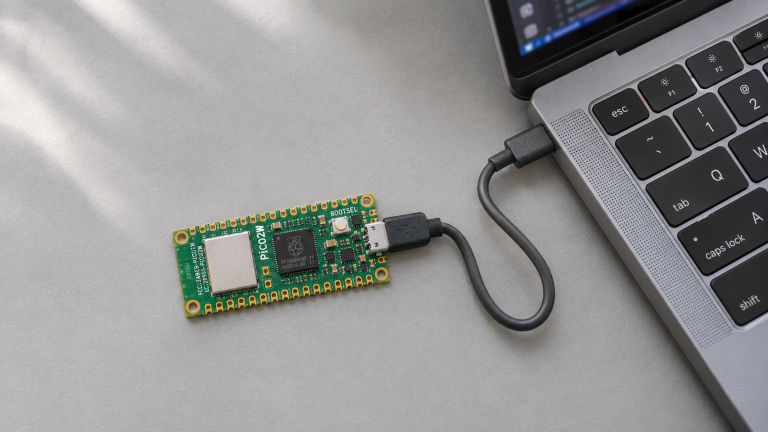
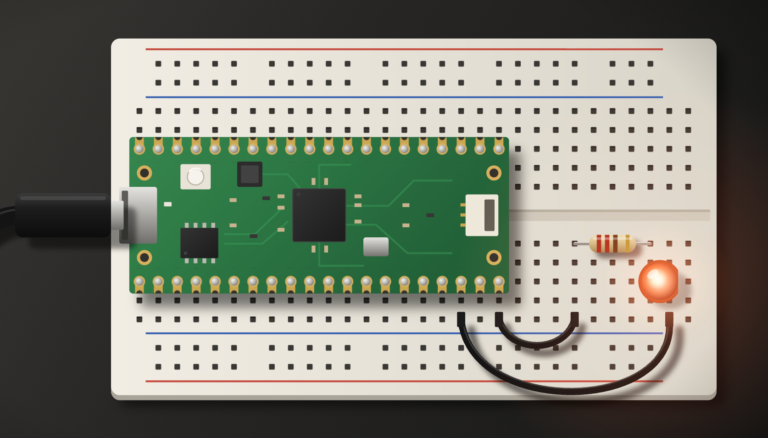
With your RP2350 toolchain verified in Part 1, it’s time to make the board actually do something — blink an LED. This guide walks…


504 articles
With your RP2350 toolchain verified in Part 1, it’s time to make the board actually do something — blink an LED. This guide walks…
This guide walks you through setting up a complete RP2350 development environment using the Raspberry Pi Pico extension for VS Code, from installing the…
In Part 2 we pushed bytes out onto the wire; in Part 3 we turn the same timer interrupt around and listen. We will…
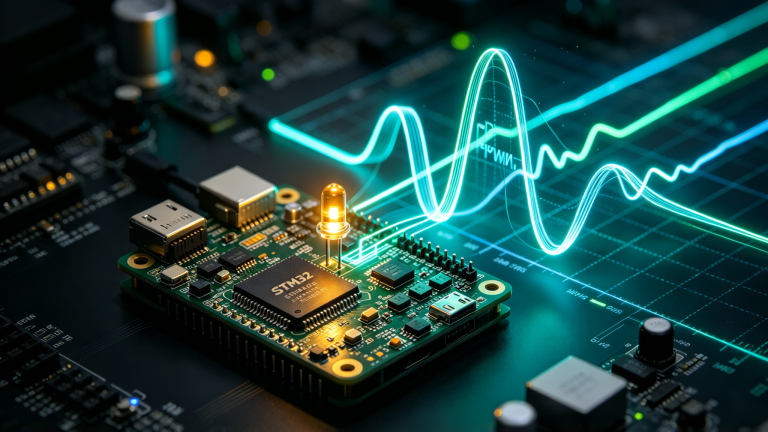
This guide walks through configuring an STM32F4 timer in PWM mode with DMA-driven duty cycle updates, using the STM32CubeMX-generated initialization and STM32 LL drivers…
In Part 1 we configured the timer and the transmit pin; in Part 2 we put that time base to work and actually send…
To achieve precise, deterministic sampling rates essential for digital signal processing and control systems, this guide explores using a hardware timer to trigger the…
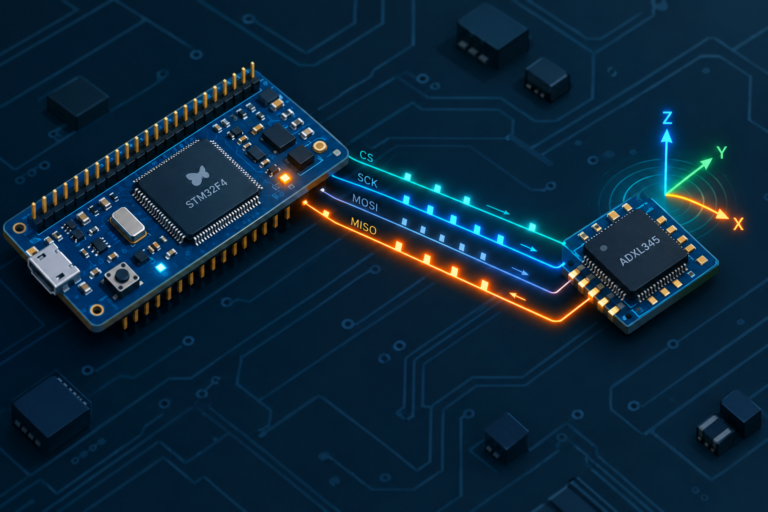
Unlike UART or I2C, an SPI master never simply listens: clocks only run while the master transmits, so every read is inherently a simultaneous…
Until now, the timer has only known how to repeat — PWM painting the same waveform over and over, forever. Output Compare is the…
In this new series guide, we shall emulate the UART hardware using a clever combination of timers and DMA to achieve effortless, CPU-independent serial…
In Part 1, we used a timer to measure time; now we’ll put it to work generating signals instead. In this part, we configure…