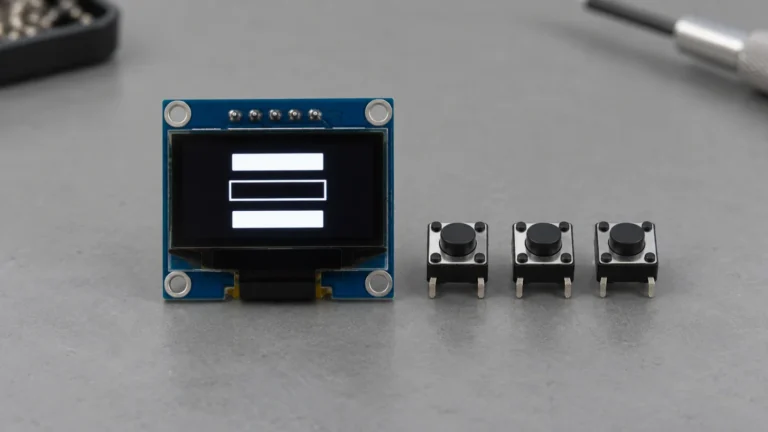
No Flicker, No Mess: Building a 3-Button OLED Menu with U8g2
A responsive menu system is the backbone of any interactive embedded device, but navigating it without screen tearing requires careful state management. In this…


A working example uses STM32 HAL driver APIs, beyond an incidental HAL_Delay call.
147 articles
A responsive menu system is the backbone of any interactive embedded device, but navigating it without screen tearing requires careful state management. In this…
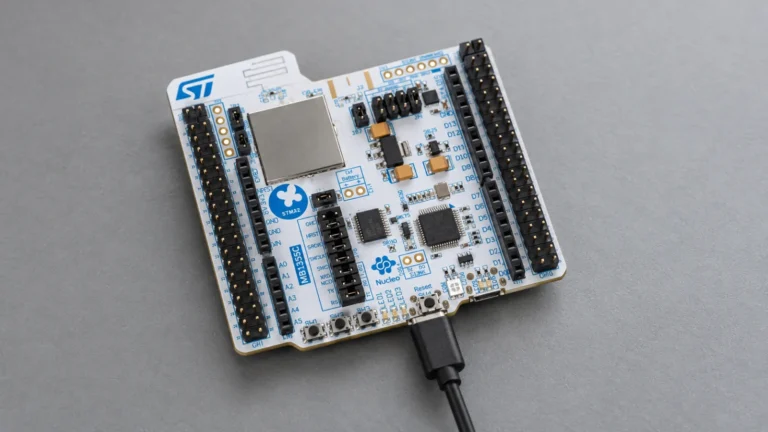
In Part 1 of our BLE application development series for the STM32WB55! In this guide, we will explore the key features of the STM32WB55,…
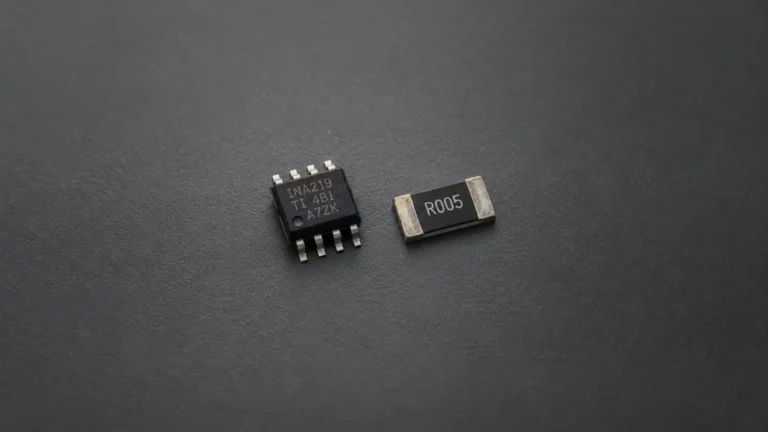
The INA219 is an I2C-based power monitoring module designed to measure high-side DC voltage, current, and power in real time. Interfacing this sensor with…
With the timer and GPIO successfully configured, we will now shift our focus to actively transmitting data. By leveraging the TIM3 interrupt, the microcontroller…
Establishing reliable bidirectional communication is the foundational step in validating the sensor emulation framework, ensuring that the master device and the emulated sensor can…
Now that the basic DMA transmission pipeline is established, the final part of this guide focuses on interfacing the STM32F407 with the onboard CS43L22…
Building upon the fundamentals of polling mode, this next section transitions to using Direct Memory Access (DMA) to handle the data stream. By offloading…
The I2S (Inter-IC Sound) peripheral on the STM32F407 Discovery board provides a dedicated, high-performance synchronous communication interface designed specifically for transmitting digital audio data…
In Part 2, we dive into the core firmware development by establishing $I^2C$ communication to read the factory-calibrated coefficients and raw data from the BMP180 sensor.…
Mastering the BMP180 begins with establishing a robust communication bridge between the STM32 and your development environment. By prioritizing the configuration of UART and…