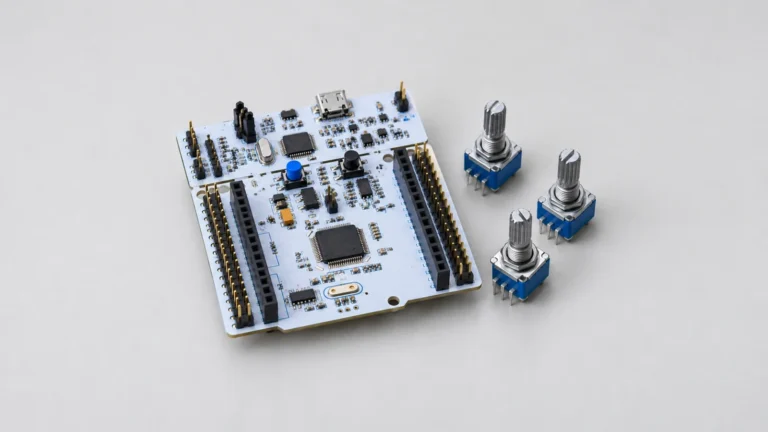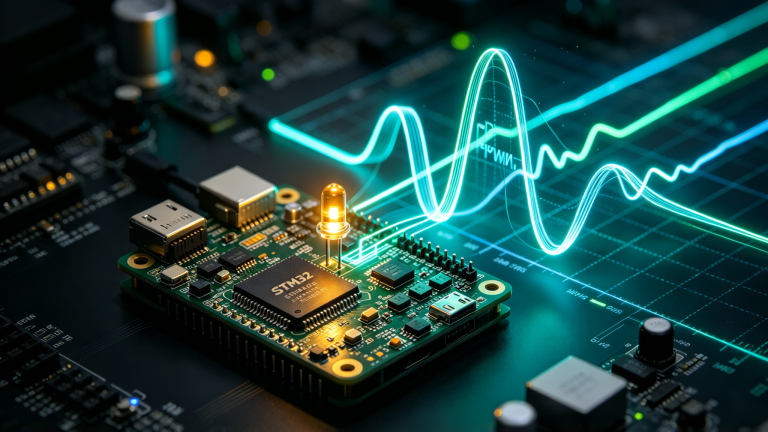
Getting Started with STM32 Low Layer (LL): PWM Generation
In Part 1, we used a timer to measure time; now we’ll put it to work generating signals instead. In this part, we configure…


526 articles · Page 2 of 53
In Part 1, we used a timer to measure time; now we’ll put it to work generating signals instead. In this part, we configure…
In Part 3 of our series, we will configure GATT Services and Characteristics on the STM32WB55 to establish two-way data communication with your smartphone.…
This guide walks through building a lightweight, framed UART protocol for emulating a sensor, covering the frame layout, parser design, and error handling needed…
Accurate timing is a fundamental requirement in most embedded applications, whether for blinking an LED, polling a sensor, or driving communication protocols. This guide…
The Serial Peripheral Interface (SPI) is one of the most common protocols for connecting microcontrollers to external devices such as sensors, memory chips, and…
In Part 2 of our series, we will configure the STM32WB55 to initialize its Bluetooth Low Energy stack and start broadcasting advertising packets. You’ll…
Expanding upon our single-channel DMA foundation, this guide scales the STM32F4’s ADC to simultaneously sample multiple analog channels. By enabling the ADC’s scan mode…
Taking data acquisition to the ultimate level of efficiency, this guide explores using Direct Memory Access (DMA) to capture continuous single-channel ADC conversions on…
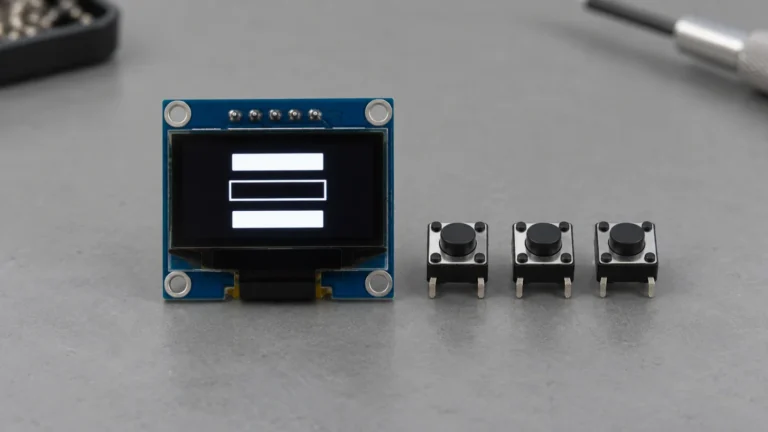
A responsive menu system is the backbone of any interactive embedded device, but navigating it without screen tearing requires careful state management. In this…
Building upon the basic single-conversion method, transitioning to continuous mode with interrupts unlocks a highly efficient, non-blocking approach to capturing analog data. This technique…